





Your car’s tires are in constant contact with the surface, and they’re subject to abrasion and pressure from supporting your car. In addition, tire rubber gradually weakens over time, and this can result in a leak. Maintaining the correct tire pressure will make your driving safer and prolong your tire’s life. As your Chevy dealer, we’d like to tell you how to easily check tire pressure.
Advice from Your Chevy Dealer: How To Check Tire Pressure
What You’ll Need
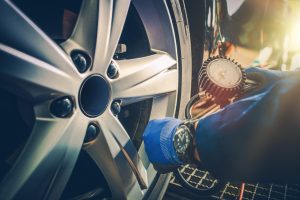
The only tool you’ll need to check the pressure in your tires is a tire pressure gauge. We recommend against trusting the pressure gauges in a gas station, as they can have long delays between calibrations. An incorrectly calibrated gauge can give you a false tire pressure reading. There are three types of gauges: digital battery-operated, manual slide, and manual dial.
These gauges vary in price, but they all perform the same task. It’s advisable to choose the type of gauge you feel most comfortable with and to buy a make that you trust. All these gauges measure the tire pressure in pounds per square inch (PSI). Once you have your gauge, follow the simple steps below to check your pressure.
Confirm Your Tire Pressure
Tire pressure can vary between Chevy models. The correct tire pressure for your tires can be found in your car’s manual. It’s also located on a metal plate on the inside door jam of your front passenger side door. Once you’ve found your tire pressure, write it down for reference. You’ll probably have different pressures for the front and rear tires due to the drivetrain of your vehicle and its weight distribution.
Park Your Car on a Level Surface
A level surface makes checking tire pressure easier and safer. Ensure your engine is switched off, your transmission selection is in park selection, and your handbrake is applied. With your tire pressure gauge in hand, you’re ready to check the tires.
Remove the First Dust Cap
The dust caps fit over the tire valve stem and prevent air from escaping. When the camp is removed, connect your tire pressure gauge to the stem and allow time to produce a reading. Once the reading is stable, write it down for later comparison. Remove the gauge and securely replace the dust cap.
Check the Remaining Tires
Repeat the above process for your three remaining tires and write down their pressures. Once you have all the tire pressures, you can compare them against the pressure your tires should have.
Now you’ve successfully checked your tire pressure, you know if they need more or less air. Our technicians can also check the pressure for you to save you time. Call our service department today at Randy Wise Chevrolet.
Connect with us

